

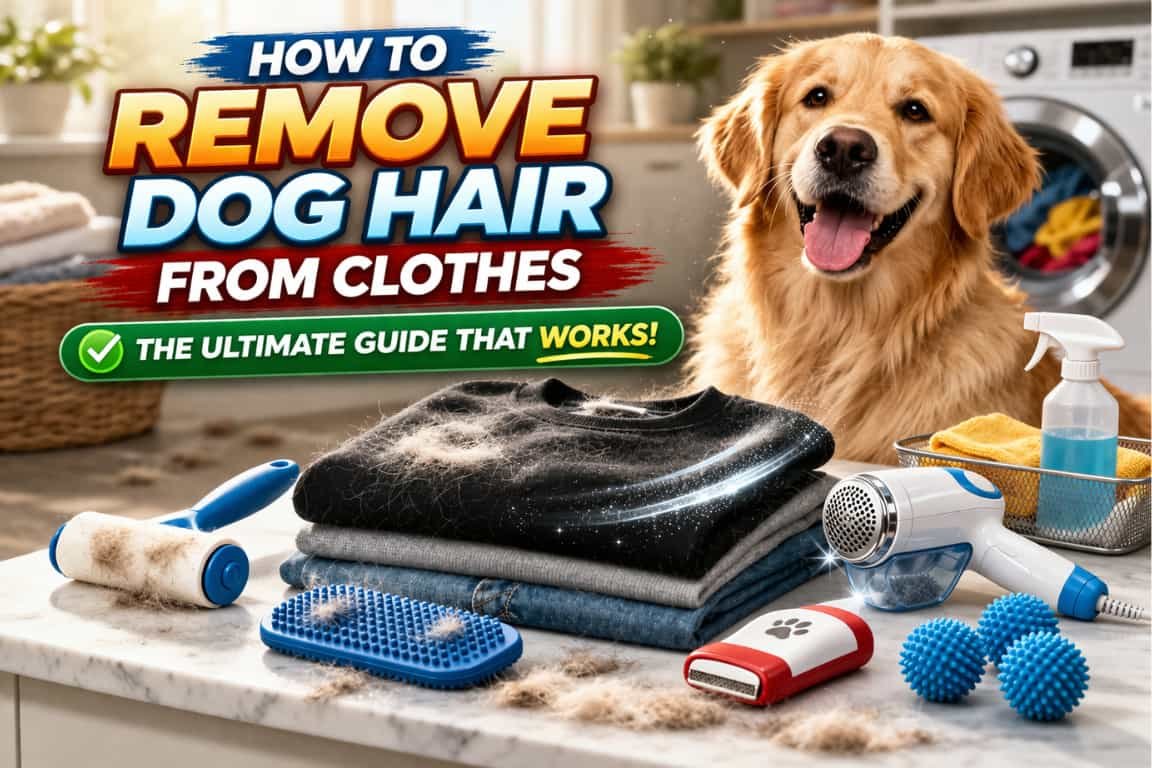
The easiest way to remove dog hair from clothes is by using a lint roller, damp cloth, rubber gloves, or dryer sheets. Apply gentle pressure to lift hair off the fabric for quick and effective results. Wash clothes with vinegar or a laundry booster to remove leftover hair. Always clean tools after use. I have tested several methods and tools to remove dog hair effectively, and in this guide, I share the ones that work best. You will learn simple, practical ways using items like lint rollers, rubber gloves, dryer sheets, and even household tricks to keep clothes hair-free. I also explain how to wash and dry clothes to remove stubborn hair, prevent buildup, and protect delicate fabrics. By following these steps, you can save time, keep clothes clean, and enjoy spending time with your dog without worrying about hair everywhere.
Why Dog Hair Sticks to Clothes
Dog hair sticks to clothes because of static electricity and fine fur on the dog. Some dogs drop more hair than others. Long-haired dogs leave more hair. Even short-haired dogs can leave strands on jackets, pants, and shirts. Dog hair gets into fabric fibers and stays there until you remove it.
If you know why hair sticks to clothes, you can choose better ways to remove it.
Best Tools for Removing Dog Hair from Clothes
Removing dog hair from clothes becomes much easier with the right tools. Simple items like lint rollers, rubber gloves, and dryer sheets can save time and effort. Using these tools correctly helps lift hair from fabric quickly, keeping your clothes clean and hair-free.
Lint Roller
A lint roller is one of the easiest tools to keep clothes free of dog hair. In hands-on use, it grabs loose hair instantly from jackets, shirts, and even knit fabrics. I roll it over seams, cuffs, and collars, and the hair sticks to the sheets. For heavy shedding, I replace sheets often, but the process is quick and straightforward. It’s portable and perfect for last-minute touch-ups before leaving the house. On smooth fabrics, it works best, and it’s surprisingly effective for fine hair if you go over the same spot a couple of times.
What We Like
- Picks up dog hair quickly on most fabrics.
- Easy to use with minimal effort.
- Great for quick touch-ups while traveling or on the go.
What We Don’t Like
- Sticky sheets run out and require replacements.
- Less effective on thick or matted hair.
- Can leave slight residue on delicate fabrics.
Price Range (USD)
- $5 to $15 for basic rollers and refills
Rubber Gloves
Using rubber gloves is a simple yet surprisingly effective way to remove dog hair from clothes. I dampen a glove slightly and rub it over the fabric, and the hair clumps together, making it easy to rinse off. This method works well for larger areas, like jackets or couch covers, and can even remove stubborn hair stuck in textured fabrics. Gloves are reusable, inexpensive, and you don’t need sticky sheets. The technique is hands-on and requires a little practice to get consistent results, but it’s extremely reliable once you master it.
What We Like
- Inexpensive and reusable.
- Works well over large areas.
- Safe for most fabrics.
What We Don’t Like
- Takes practice to get the moisture level right.
- Less precise for small areas or tight seams.
- Slower than lint rollers for quick touch-ups.
Price Range (USD)
- $3 to $10 for a pair of standard rubber gloves
Dryer Sheets
Dryer sheets help remove dog hair by reducing static cling on clothes. I toss clothes in the dryer with a sheet for about 5–10 minutes on low heat, and most hair loosens and collects in the lint trap. You can also rub the sheet directly over fabric to pull off hair. This method is great when combined with a lint roller or brush, and it softens clothes while loosening stubborn strands. Dryer sheets are convenient, especially for multiple garments at once, but alone, they may not remove all heavy shedding, so I always pair them with another tool.
What We Like
- Reduces static, making hair easier to remove.
- Softens clothes while loosening hair.
- Works on multiple garments at once.
What We Don’t Like
- Single-use sheets create waste.
- Less effective on heavy hair alone.
- Some people dislike the added fragrance.
Price Range (USD)
- $5 to $12 per pack of 40–50 sheets
Clothes Brush
A clothes brush is ideal for thicker fabrics or embedded dog hair. I brush jackets, coats, and sweaters in one direction, and hair collects on the bristles. Some brushes have dual sides for delicate and heavier fabrics. This method requires a little effort, but it’s long-lasting and reusable, making it cost-effective over time. Unlike lint rollers, there’s no need to replace sheets, and it works well even on textured surfaces. It’s perfect for removing hair before washing or for fabrics that can’t go in the dryer.
What We Like
- Brushless motor at a more accessible price.
- Good weight balance for comfortable handling.
- Solid overall performance for medium coats.
What We Don’t Like
- Slightly less power than premium heavy-duty models.
- Battery charging time is longer.
Price Range (USD)
- $10 to $25 depending on brush quality and size
Step-by-Step Ways to Remove Dog Hair from Clothes
Removing dog hair from clothes can be frustrating, but following a simple step-by-step routine makes it much easier. From shaking garments to using tools like lint rollers, rubber gloves, and dryer sheets, these practical steps help you get clothes clean and hair-free every time. If you’re dealing with hair in multiple places, the same habits often help in other spots too, especially when looking for the best way to get dog hair out of car seats or fabric.
1. Shake the Clothes Outside
Take your clothes outdoors and shake them firmly. Hold each garment by the shoulders or hem and give it a good pull. Most loose dog hair falls off immediately. This simple step reduces the amount of hair you’ll need to remove with tools later.
2. Use a Lint Roller
Roll a lint roller over the fabric from top to bottom, pressing lightly to pick up hair. Replace the sticky sheet when it becomes full. Pay special attention to seams, cuffs, and collars, where hair often hides. Repeat if necessary for stubborn strands.
3. Use Rubber Gloves
Slightly dampen a rubber glove and run your hand across the clothing. Hair sticks to the glove and forms clumps you can rinse off. This method works well on large surfaces or textured fabrics and can be repeated until most hair is removed.
4. Try a Dryer Sheet
Place clothes in the dryer with a dryer sheet and run on low heat for 5–10 minutes. The anti-static effect loosens hair, making it easier to brush or shake off afterward. This step also softens fabrics and reduces static cling.
5. Wash Clothes with Vinegar
Add half a cup of vinegar to your regular detergent before washing. Vinegar helps release hair from fabric fibers and prevents it from sticking back onto clothes. Use your normal wash cycle, but avoid overloading the machine for best results.
6. Dry with a Laundry Booster
After washing, toss clothes in the dryer with a laundry booster or pet hair remover sheet. These products help pull remaining hair into the lint trap and stop it from sticking back onto clothes. If you’re already dealing with shedding in your home or even your vehicle, knowing the best way to get dog hair out of a car can make routine cleaning much easier. Use low heat or air-dry settings for delicate fabrics.
7. Use a Clothes Brush After Drying
Once clothes are dry, use a clothes brush to remove any hair left behind. Brush in one direction for best results, focusing on thick fabrics or textured areas. This final step ensures your clothes look clean and hair-free.
How to Remove Dog Hair from Sensitive Fabrics
Some fabrics need extra care to prevent damage while removing dog hair. Using the wrong tools or techniques can ruin delicate materials. Here are practical, safe methods for cotton, polyester, wool, cashmere, and silk that really work.
Cotton and Polyester
Cotton and polyester fabrics handle hair removal well. You can use a lint roller or rubber gloves to lift dog hair easily. Washing with a small amount of vinegar helps release hair from fibers. These fabrics tolerate normal washing and drying without risk of damage.
Wool and Cashmere
Wool and cashmere require gentle handling. Use a soft clothes brush or rubber gloves to lift hair, but avoid rubbing hard. Skip dryer sheets, as they can damage fibers. After washing, air dry these fabrics flat to keep their shape and texture intact.
Silk
Silk is very delicate and needs careful hair removal. Use a soft lint roller and avoid rough tools that can pull threads. Remove hair before washing, and always hand wash with a gentle detergent. Pat dry or air dry to prevent stretching or damage.
How to Prevent Dog Hair on Clothes
Preventing dog hair from sticking to clothes saves time and keeps garments cleaner for longer. Simple habits and small changes in your routine can reduce shedding on clothes and minimize the need for constant cleaning.
Brush Your Dog Often
Regular brushing removes loose hair before it lands on your clothes. Brushing a few times a week reduces shedding and helps keep your home cleaner. It also strengthens your dog’s coat and distributes natural oils, making the hair less likely to cling to fabrics.
Use a Pet Hair Remover on Furniture
Furniture can collect hair that transfers to clothes. Use pet hair removers, sticky rollers, or vacuum attachments on sofas, chairs, and cushions regularly. Reducing hair on furniture significantly lowers the amount that ends up on your clothing after sitting or lounging with your dog.
Wear Outer Layers
Wearing jackets, scarves, or other outer layers when playing with your dog protects your main clothes. You can remove these layers before entering the house, preventing hair from sticking to your everyday garments and keeping them clean throughout the day.
Choose Hair-Resistant Clothing
Certain fabrics naturally attract less hair. Leather, smooth synthetics, and tightly woven fabrics are less likely to hold dog hair than wool, knitwear, or fuzzy materials. Choosing these fabrics for daily wear can reduce hair accumulation and make cleaning much easier.
Common Mistakes to Avoid
Removing dog hair from clothes is easier when you avoid common errors. Small mistakes can make hair harder to remove, damage fabrics, or even spread hair to other garments. Here are key pitfalls to watch for:
Watch Out For These Mistakes:
- Washing Without Removing Hair First: Putting hairy clothes directly into the washer spreads hair to other items and can clog the machine. Always remove loose hair before washing.
- Using Hot Water on Delicate Fabrics: Hot water can shrink or damage delicate fabrics. Use cool water and remove hair gently before washing.
- Ignoring Seams and Cuffs: Hair often hides in seams, cuffs, and folds. Go over these areas carefully with a lint roller or clothes brush for thorough cleaning.
How Often Should You Clean Hair from Clothes?
If you live with a dog, do quick hair removal every time you wear clothes outdoors. For heavy shedding seasons, clean clothes before storing them.
Tips That Really Help
- Stop hair before it sticks by brushing your dog often.
- Keep pet tools handy in laundry and closets.
- Use simple steps in the same order: shake, lint roll, glove, wash, dry, and brush.
- Work piece by piece for heavy hair build up.
Conclusion
Removing dog hair from clothes doesn’t have to be difficult. With the right tools and techniques, you can keep garments clean and hair-free. Lint rollers, rubber gloves, dryer sheets, and clothes brushes all help when used properly. Washing with vinegar, using laundry boosters, and brushing sensitive fabrics carefully can also improve results. Regular grooming makes the biggest difference, especially for thick-coated breeds, and tools featured in guides like the Best Dog Clippers for Thick Hair in 2026 can help reduce shedding at the source. By staying consistent and avoiding common mistakes, you can save time, protect your clothes, and enjoy time with your dog without hair taking over everything.
FAQs
1. What is the best tool to remove dog hair from clothes?
The best tool depends on your needs. Lint rollers are fast, rubber gloves work on large areas, dryer sheets soften clothes, and clothes brushes handle thick fabrics. Combine tools for best results.
2. How much does a good lint roller cost?
A standard lint roller costs between $5 and $15, depending on brand and number of sticky sheets. Replacement refills are sold separately and range from $5 to $10 per pack, making it an affordable solution for daily dog hair removal.
3. Are rubber gloves effective for dog hair removal, and what’s the price?
Yes, slightly damp rubber gloves are surprisingly effective on large surfaces or textured fabrics. They collect hair in clumps for easy rinsing. A good pair of reusable rubber gloves costs around $3 to $10.
4. Can dryer sheets really remove dog hair and how much do they cost?
Dryer sheets reduce static cling, helping hair loosen during drying. They work best with other tools like lint rollers. A pack of 40–50 dryer sheets costs between $5 and $12, offering multiple uses for pet owners.
5. How do I prevent dog hair from sticking to clothes, and is it expensive?
Prevention includes brushing your dog regularly, using pet hair removers on furniture, wearing outer layers, and choosing hair-resistant fabrics. These methods cost little to nothing, except for optional hair-removing products, saving time and keeping clothes clean.